What am I to you? What do I look like? What do I sound like?
These questions are, clearly, not unique to the environment of social media. They apply to the corporeal, all the way back to the early 1600s and the life of English philosopher, John Locke. Locke explores questions of perception, reality, and certainty. What might Locke have to say in 2020? Now more than ever, our platform society has afforded us increased levels of control over how others perceive us. It follows that the social media savvy may just be able to shape our reality.
Chapter 24: Social Media from the book, Media Effects: Advances in Theory and Research covers the many uses of social media from the practical level to the conceptual. A user could utilize social media as a tool for the acquisition of social capital, the maintenance of relationships, and diffusion of information. Using social media is particularly advantageous in these departments due to its qualities of customization, curation, and efficiency. These qualities allow us to fudge the truth every now and again. Your followers will only see your best angle, and you will have those extra few seconds to think of something witty to say over IM. The curation of my social media profile tells a story about me. It is a short story, reduced down to an easy consumable morsel. For many, a social media profile is a newly cleaned room; you’ll step into the hall and return to it to see just how clean it would look to a stranger. How will they perceive you?

In order to appreciate the power of controlling perception, one must understand John Locke’s idea of “indirect realism” and the surrounding theories regarding the relationship between perception and reality.
Imagine you are holding a cube, looking at it so it’s square face is pointing directly at you. Now imagine rotating it so one of the corners is pointing directly at you.

Your square will become a hexagon. The cube itself didn’t change, your perception of it did. Commonly associated with John Locke, the theory of indirect realism offers an explanation for this phenomenon. The indirect realist believes that, in our world, there exists material objects (like the cube); however, when we observe a material object we are not looking at the object itself, but rather a mental image of the material object formed in the mind. The eye is like a camera, each mental image is like a photograph showing the subject from a variety of angles.
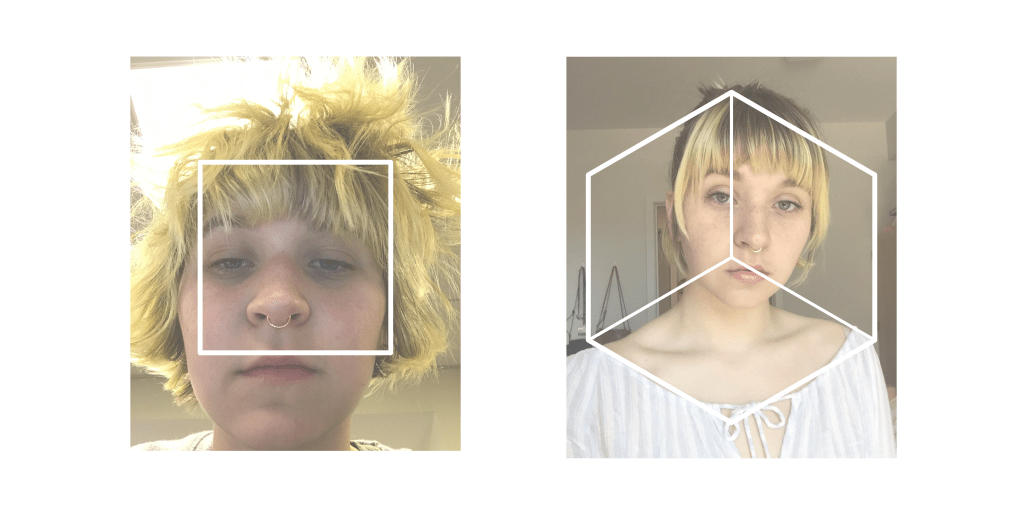
As described in Chapter 2: CMC Diffusion and Social Theories from the book, Social Media Communication, in social media, people have an online presence that is determined by what we want to share with others. This virtual representation of the self often approaches a certain ideal; achieving this ideal will likely help reap the benefits of social media. For this reason, it is very common for people to manipulate people’s perceptions online; users will be selective about which angle the cube is being shown, and which mental image in conjures.
This extends beyond merely the aesthetic. By controlling the circumstances in which an image or sentiment is perceived, one controls reality. According to indirect realism, everything we see is a mind-dependent object, it’s state of being is reliant upon being perceived by a mind. Irish Philosopher, George Berkeley responded to Locke by saying the object’s very existence is reliant upon being perceived by a mind. This position is called idealism. While this may sound like a stretch, Berkeley was not arguing for the non-existence of this, but the existence of all things as a collection of ideas produced by the mind.

How often do we question our own perception? Perceiving is the only method by which we can experience reality; consequently, we typically trust our senses and accept our own reality. When we follow a fitness account, a celebrity account, a news account, or even a personal account, the owner of the account imposes an unnatural mental image in our minds. These mental images are the building blocks of our reality. Your social media profile is a living document that gives you the power of self-representation. In a digital culture, this power may define your very existence and alter your reality.
 christina.net
It was interesting and valid to say social media shapes our reality. Everything that is put out on social media is strategically controlled, causing viewers to put together a mental image of who you are. I appreciated you making the connection to philosophical findings and clever analogies. It helped me understand the concrete, textbook explanations in a more eye-opening sensical way. I relate to the cleanroom analogy. I ALWAYS go back to check on my social media profiles, even if I haven’t done anything to alter it. It’s a habitual act I make because I am constantly making sure that my social media profiles match the identity I want to put out there. The philosophy concepts made sense to how we perceive. Different angles will have different perceptions so we can’t always believe what is out there – thank you for that. I would have loved to see more comparisons/correlation between the philosophical concepts and social media trends instead of an explanation of the concepts.
LikeLike
Hey Christina! I found this post so interesting, especially after our last class discussion where you elaborated more on the idea of indirect realism. The photos you included were really beneficial to this blog post and supported the visuals you were describing in your writing. I definitely understand how camera angles can effect how we look in a picture and sometimes its downright rude. Now I’m aware of the fact that theres a name for this annoying phenomenon. I think you’re a strong writer which helped this post a lot since the topic could be hard to explain, but you did great. One suggestion would be to include headlines in the body, but I feel like this particular post still was still easy to follow without. Good job!
LikeLike
I really like your mention of recent Coronavirus coverage. The sensationalization of international news like that tends to have ramifications like xenophobia and outright racism, as you mentioned. I quickly got tired of seeing insensitive anti-Asian jokes on people’s Instagram stories when in reality, the flu has proven to be much more deadly because of American ignorance. Sensationalized news is not always even misinformation, but it is reported in a way that implies it is a much more pressing issue than it is.
Media literacy also plays into the spread of misinformation and disinformation. Those who are unable to distinguish credible sources from sensationalized news unknowingly spread false information. This is prominent in older generations, and I’m excited to talk about the generational digital divide in a couple weeks for that reason!
LikeLike