In freshman year of college I found a little diamond-in-the-rough podcast called Why Oh Why, hosted by Andrea Silenzi. It was a podcast about dating, in particular: online dating. I didn’t know why the podcast resonated with me until now.

The Game
I had just broken up with my high school boyfriend. I was wayward, in love with everyone I saw. My friend, Alex, made me a tinder as a joke. The bio said something like “Art school girl, loves adventures and traveling, open to anything as long as I’m the center of attention.” We swiped and and swiped did our best to make a mockery of the whole thing. The app itself lived in my games folder.
It wasn’t long, however, until I rewrote my bio, listing my interests, my hobbies, and my dreams. I replaced the pictures with better ones to convince them that I was social, creative, pretty, etc. The game had entered my real life.

Guilty Pleasure
The disillusionment model: used in reference to relationships in which each person’s positive perceptions of one another are broken by the minutiae of everyday life.
Expectancy violations theory (EVT): refers to heightened feelings of person-related disappointment. This occurs when a person’s expectations are violated.
In the Article, Guilty Pleasure? Communicating Sexually Explicit Content on Dating Apps and Disillusionment with App Usage published in the journal, Human Communication Research, a study measured disillusionment in dating app users. The study examines how pre-existing opinions about sexual content, motives and expectations around dating app usage, and self selection variables such as gender, sociosexuality, and enjoyment of self-objectification affect levels of disillusionment with sexually explicit content. Encountering explicit content is inevitable when you are a woman on a dating app. It is fascinating, however, to see what your behaviors can tell you about yourself.
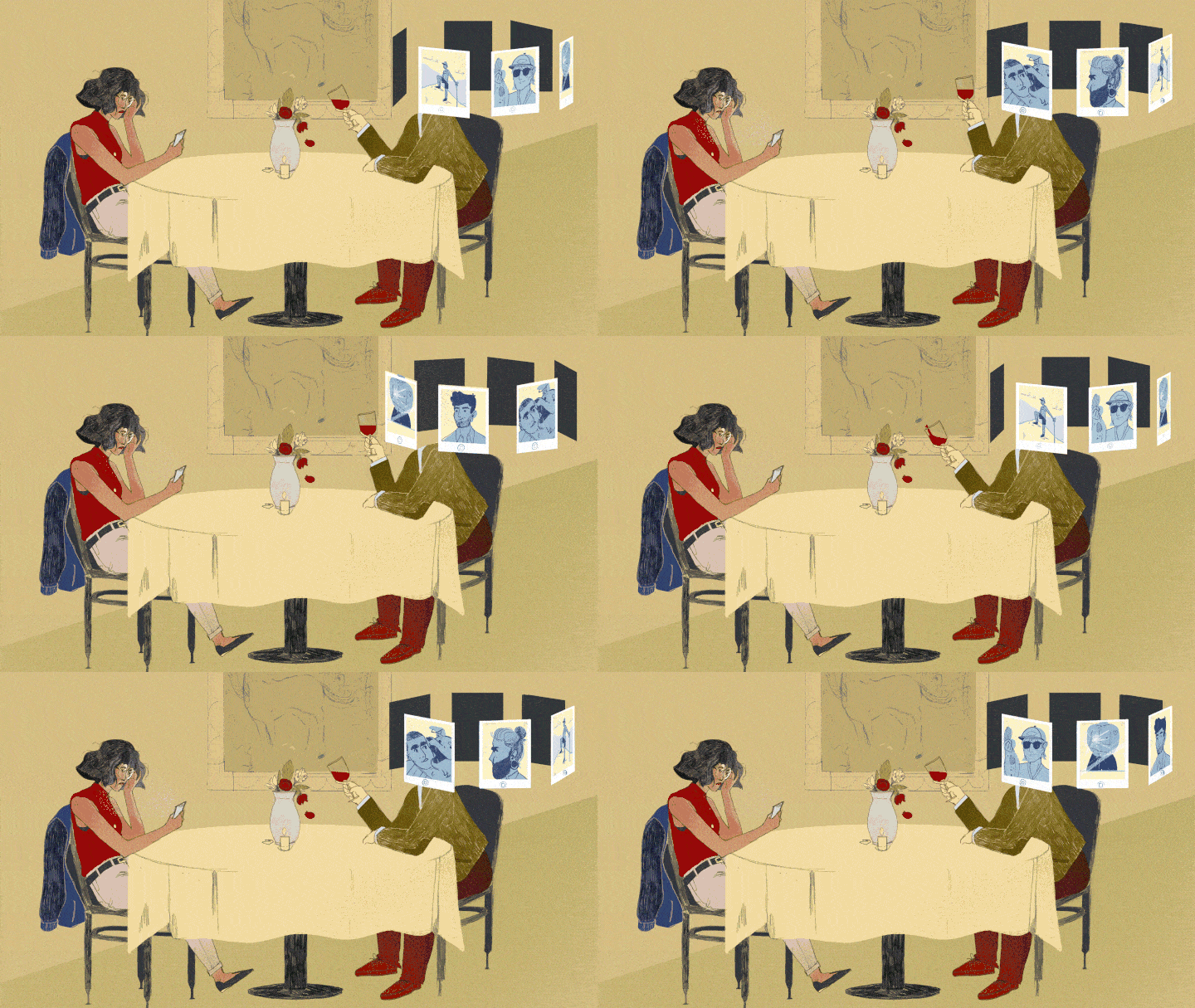
On Tinder, I noticed several behaviors in myself:
- I had a low tolerance for unsolicited sexual content.
- I was surprised when especially attractive people matched with me
- I was averse to putting in any more effort than I had to in conversations
- I was easily bored and fickle
- I pursued a conversation if I sensed that the person was as disillusioned as I was
The dates I went on were all perfect disasters and hilarious stories I still tell to this day. Although I was enjoying playing the game, I was no closer to fulfilment.

Why Oh Why
In freshman year of college I found a little diamond-in-the-rough podcast called Why Oh Why, hosted by Andrea Silenzi. It was a podcast about dating, in particular: online dating.
As I listened to the Why Oh Why podcast alone in my dorm, Andrea took me through her online dating journey. She was older than me and more conscious of her biological clock, but the things she had to say struck a chord.
As women, we may feel like we need the advice of an economist. Andrea talks about the concept to the reverse timeline:
“Once a woman decides she wants to have kids it changes how she dates. She does this backwards math to determine by what age should be meeting a lifelong partner… I see the timeline playing out on my friend’s Facebook pages all the time don’t you?”
She was disillusioned with the process of dating. She wanted for love to fit into her plan.

In episode #8: How will I know? she spoke to economist Tim Harford, from NPR’s Planet Money. She was as disillusioned, (like I had come to be in a semester). She asked an economist how to optimize her experience.
Andrea Silenzi: “I think what I’m trying to optimize here is – if I’m going to spend time – you know, I’m going to set aside a Thursday… I want to make it worth my time. I want to make sure that I’m – I don’t want to waste a Thursday.”
Tim Harford: “The scarce resource here is not men. The scarce resource is Thursday.”
From there, they arrived at the idea of a Skype call instead of a first date. In the interest of saving Andrea time, and money, and disillusionment. The one man she tried it with was a man named Mike. The call was recorded for the show.
Andrea: “This is so weird!”
Mike: (laughing) “Yeah, hey, it was your idea.”
Andrea: “No it’s an economist’s idea… But it was my idea to take dating advice from an economist.”
They laughed at the absurdity of the situation. The two spoke for a while per Harford’s advice and eventually they fell in love.
Who knew Economists had the key to love the whole time right?
The Paradox
“We’re not gonna make it are we?” Andrea recounted the end of her relationship with Mike. She remembered the time they had shared together in the gentle, human, melancholy way that only she could do.
“I still keep a list on my phone of all the stuff I wanna tell you about.” She said.
(just like I do)

Episode #8 was not a story about how an economist’s dating advice solved all her problems. It wasn’t the story of how a relationship solved all her problems. It was a personal account of a love that began with good intentions and great expectations, but turned out to be as messy and flawed as all love tends to be.
Economics is like doing math where the numbers have their own agendas. Being a woman in the dating world is much the same. How do we avoid disillusionment and find lasting relationships. How does a woman navigate this paradox?
At 18 I didn’t have to know the answer, but Andrea’s story gave me a strange kind of solace. Perhaps I can avoid being violated by facing my expectations. For me, the cure to disillusionment is comfortability in the unpredictable nature of love.

 christina.net
Christina! I really loved this idea. I’m not personally on dating apps because they frighten me a bit but it’s a guilty pleasure of mine to see my friends using them and telling me their tales of woe. I think the managing of expectations is critical in most facets of life given the fickle nature of people. We want things how we want them, and with such little accountability on online dating it’s easy to be bored, disillusioned, and ghosting people when they’re disappointing. Tinder in a sense reminds me of the episode of Black Mirror we got for class, it’s amusing to play the swiping game but it also lets us have a harsher edge since it’s an online interaction.
LikeLike